


Welcome to issue #5 of Art & You. Each week, I send one essay exploring how art can be used as a practical tool for emotional resilience and well-being, through experiments, reflections, and case studies.
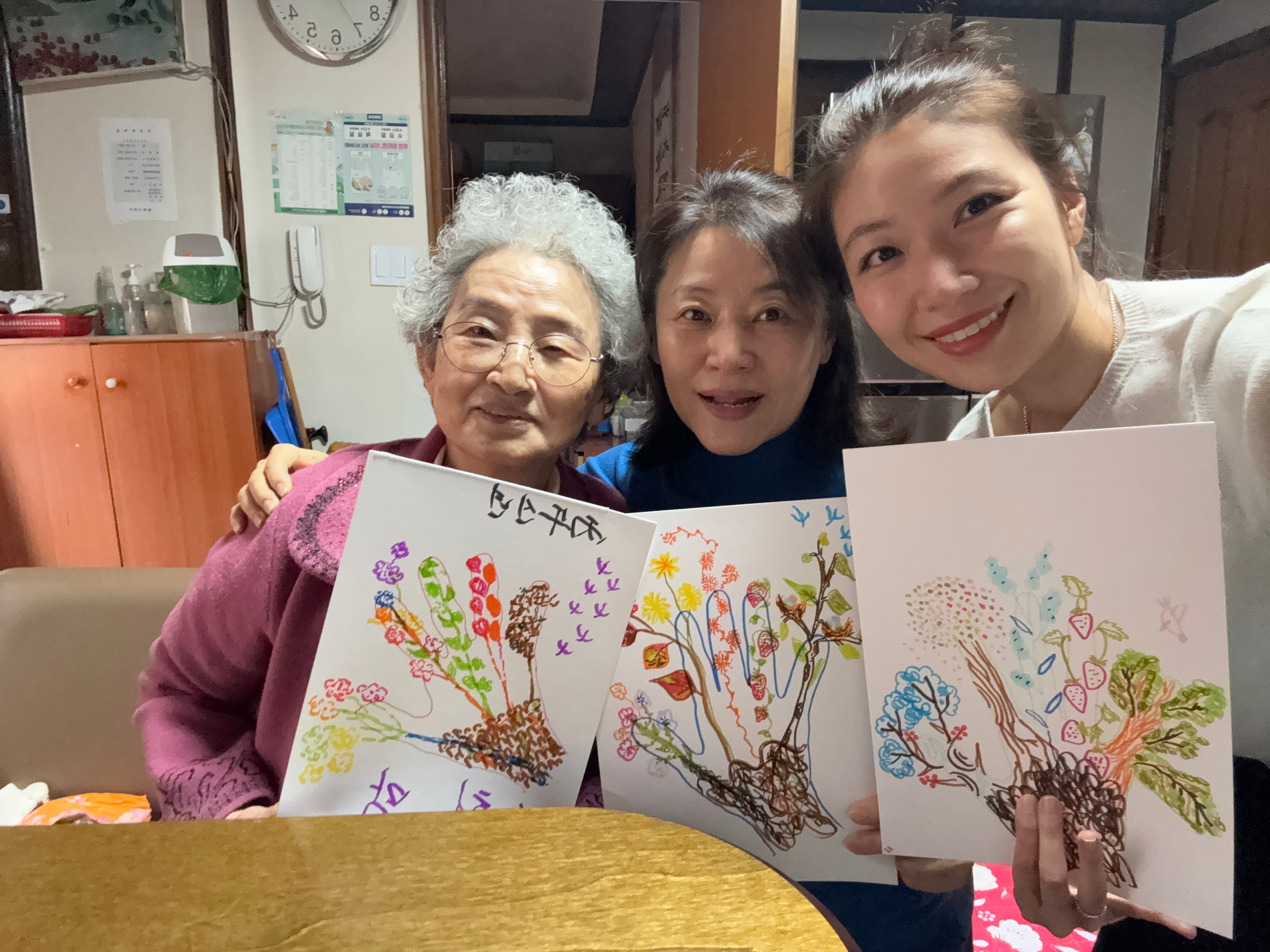
Last week, I visited my grandma for Lunar New Year and decided to try something different. Instead of the usual catch-up over food, I ran an Art & You session with three generations — my grandmother (90s), my mom (60s), and me (30s).
To be honest, I was nervous. Would my grandma be able to follow the prompts? Would she want to do this? She’s 90. But she did it beautifully and what came out of that hour surprised all three of us.
Why This Session, Why Us
When we visit grandparents, conversations tend to follow a familiar script. How are you feeling? Are you eating well? How’s your health? These questions come from love, but they don’t leave much room for anything new to surface.
I wanted to see what would happen if we skipped the script and made something together instead to open up a different kind of exchange.
Three Generations, One Table
I had two things in mind when designing the session.
First, the prompts needed to be simple and clear enough for my grandma to follow, but also open enough that all three of us could bring our own stories to them. Second, the materials had to be easy to use. So I went with markers.
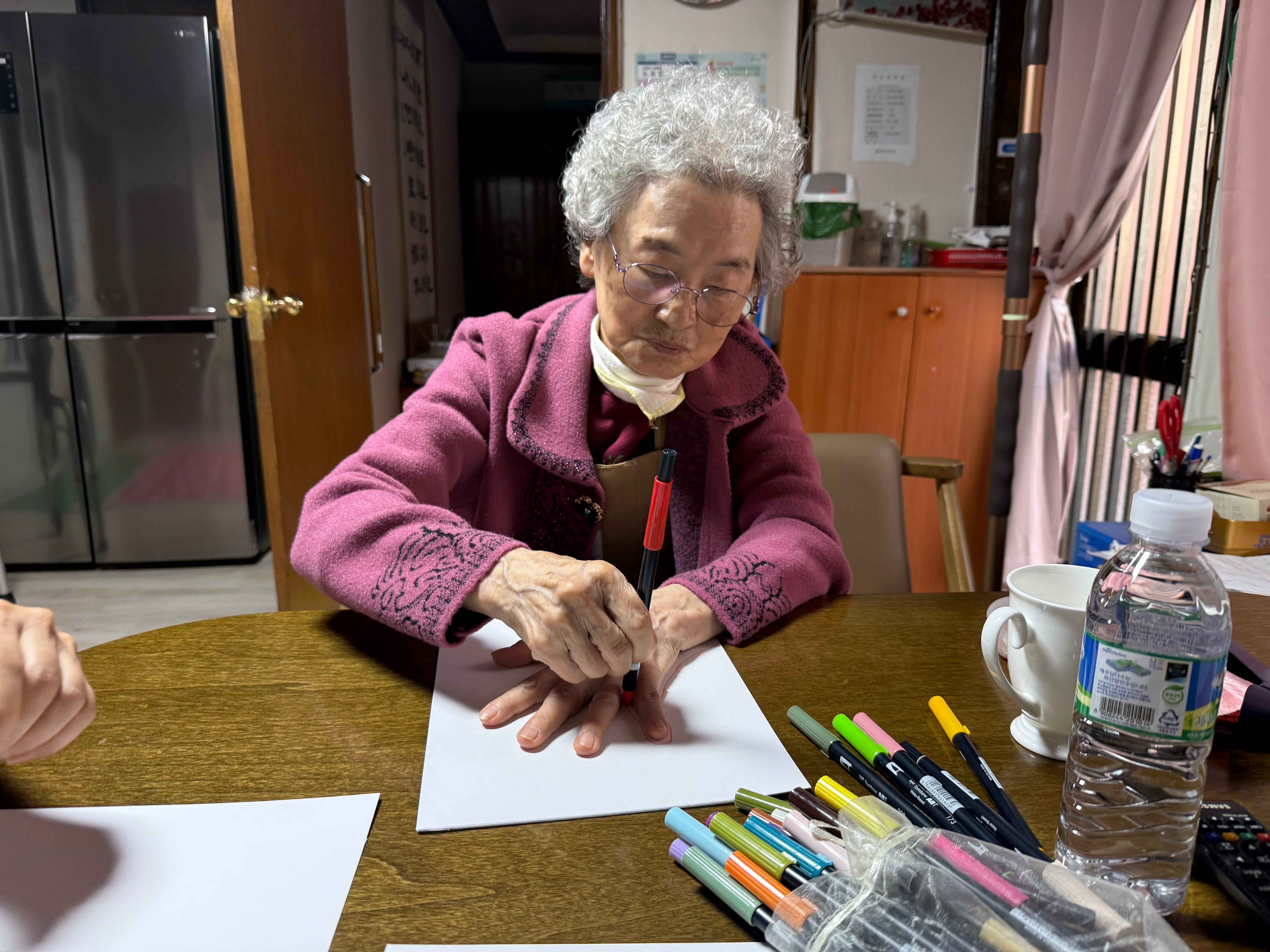
The activity was a “memory garden.” We each traced our hand, then filled in the base as soil. For each finger, I gave a prompt tied to something personal: pick your favorite season and plant a flower that blooms in that season. Think of a meaningful person in your life and plant a tree or flower for them.
I also limited the color options for two prompts. I learned from my own experience, regardless of age, fewer choices means less decision fatigue and more freedom to just create.
What Actually Happened
Facilitation was harder than I expected. My grandma’s hearing isn’t great, and I quickly realized I didn’t have enough experience communicating with seniors over 90. My mom became my co-facilitator in real time, repeating and rephrasing my prompts in ways my grandma could follow.
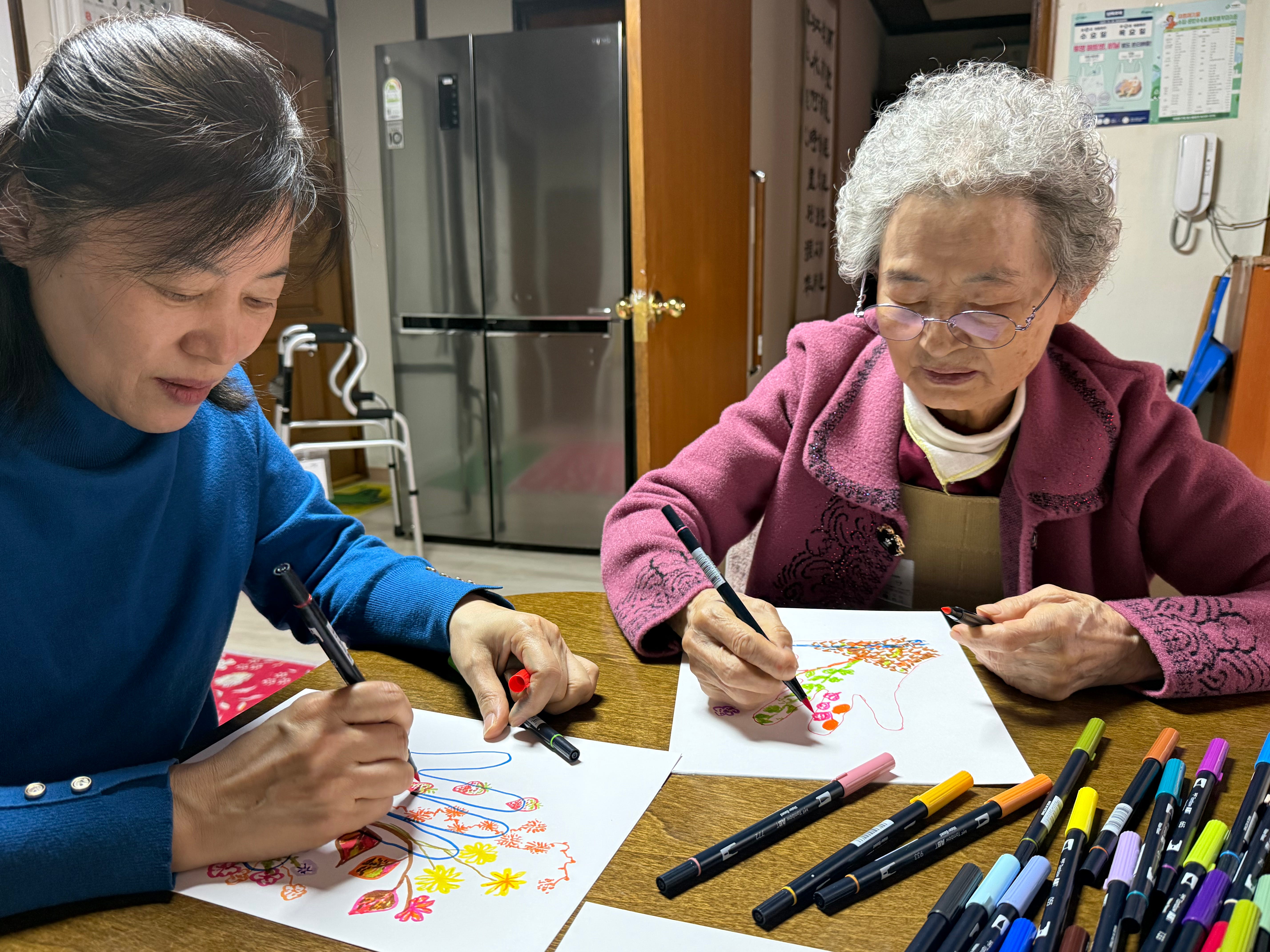
My grandma hesitated at first. She was doubtful if she can draw flowers. But with continued encouragement, she kept going. One thing I learned in the process is that specific examples matter. When I said “draw a flower from your favorite season,” she was a bit lost. Then we added “like cherry blossoms, magnolias, or tulips for spring”, she started getting some ideas.
That’s a facilitation insight I’ll carry forward. Open-ended prompts are great for sparking creativity, but sometimes people need a concrete starting point before they can make it their own.
Art as a Bridge Across Time
The most fascinating moment came from the final prompt. I asked them to imagine that family members or loved ones are visiting, and they’re represented by birds. How would you create a comfortable place for them to stay?
Three very different responses:
My grandma drew a flock of wild geese flying toward branches full of food as if many family members were arriving at once and she wanted to make sure everyone was fed and welcomed.
My mom drew a tree with a nest and eggs inside, imagining birds protecting their babies.
I drew a single bird on a big tree with long, wide branches as a spacious, quiet place for it to just rest.
Same prompt but three completely different worlds shaped by each person’s season of life. My grandma thinking about gathering and hospitality. My mom thinking about nurturing and protection. Me thinking about space and rest.
Creative Health Doesn’t Have an Age Limit
At the end, I asked how the session felt.
My grandma said she felt hope, and that it had become a special memory. My mom said it was one of the most meaningful bonding experiences she’d had with her own mother in a long time and that seeing each generation’s response was genuinely surprising. I felt touched watching my grandma be creative regardless of her age, fully present and having fun. And watching her and my mom connect through something other than caregiving or logistics.
We tend to have a hard time understanding certain things about each other across generations, and over time that gap quietly becomes distance. But when you make art together, the only role you play is being creative and reflective. It becomes neutral territory, a space where you can share things you didn’t get to share before, without the weight of explaining.
This session reminded me that creative health is for anyone, at any age, who could use a different way in to each other.
If this post resonated with you, the best compliment would be to share it with one person who might enjoy this or restack it for others to discover 💚
This is beautiful. During the pandemic, myself, my daughter, and my mom decorated brown shopping bags for one of the food banks here that delivered food to Asian seniors. Seeing the three of you at the table with art supplies spread out reminded me of those days.
What a wonderful way to spend some time together! I love this.