


Welcome to issue #12 of Art & You. Each week, I send one essay exploring how art can be used as a practical tool for emotional resilience and well-being, through experiments, reflections, and case studies.
Last week, my mom told me what my grandma had said on the phone. That the art session we did together, which I wrote about a few issues ago had given her so much happiness she still thinks about it. And that she never thought she’d be able to do this kind of activity again at her age 😭
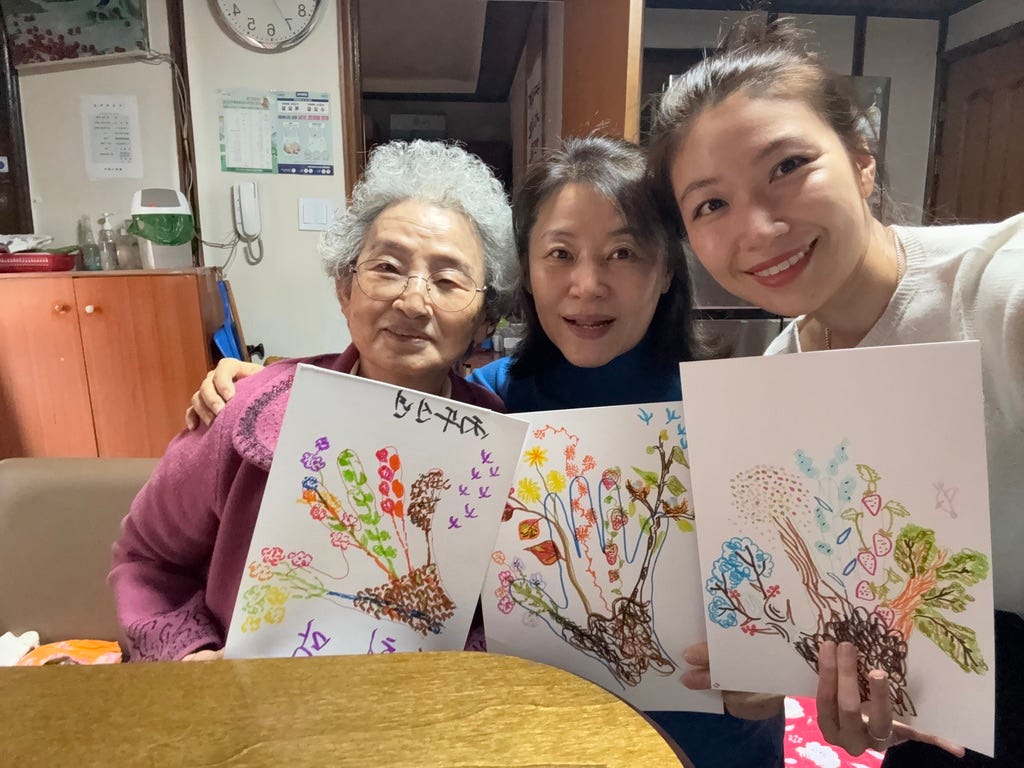
During the session, she had no trouble creating something thoughtful and beautiful. What she lacked wasn’t ability. It was confidence. It made me think about aging and creativity.
How often do we assume that creative life fades with age? Or that older adults wouldn’t be interested, or capable? Most traditional care models focus on physical health and daily support. But they rarely make space for something just as important: the ability to create, express, and feel a sense of possibility.
What is creative aging?
After that chat with my mom, I started looking into something called creative aging (it’s becoming a recognized movement and emerging field).
In 2006, a researcher named Dr. Gene Cohen ran what’s now considered a landmark study on arts engagement in older adults. He found the people who participated in intensive art programs reported better overall health, fewer doctor visits, less medication use, and greater social involvement. The data was solid enough that it changed how researchers thought about arts engagement in later life.
The term that came out of this work is “creative aging”. It’s something that continues to support health, connection, and meaning as we get older. Lifetime Arts, an organization that trains teaching artists to work with older adults, puts it this way: creativity is lifelong, and older adults are essential cultural contributors, not an afterthought.
The art form doesn’t matter much. Visual arts, dance, storytelling, music, digital work. What matters is that it’s intentional, and it’s social.
What Actually Happens to the Brain and Body
Okay, I’ll briefly nerd out here because the research is genuinely interesting.
Arts programs for older adults with mild cognitive impairment show real improvements in memory and language. Group activities — dance, music, storytelling, visual arts — produce meaningful reductions in depression and anxiety. Regular engagement with cultural spaces and creative groups is linked to lower rates of loneliness. And for marginalized communities in particular, community arts projects become a space to reclaim cultural heritage and confidence.
I watched this play out with my grandma in reverse. When she was living in a community senior home, she was engaged in singing, crafting, being around people. Then she moved back home for personal reasons, and the shift was huge. The loneliness, the isolation, the loss of confidence. It crept in fast once the creative and social structure was gone.
Which is why that phone call meant something beyond just a nice family moment. Creative engagement isn’t a bonus for older adults. It’s one of the more reliable pathways to a sustained sense of purpose and belonging. And as populations age, arts and creativity programs are increasingly being evaluated not just for emotional impact, but for real value within health and social care systems.
Where is creative aging happening now?
Once I started paying attention, I found a surprising amount of initiatives and these are a few of them.
Brooklyn Public Library has been running multi-session creative aging workshops since 2012, for patrons aged 55 and up. Six to ten sessions, ninety-plus minutes each, led by professional teaching artists. I live in Brooklyn and had absolutely no idea.
There’s also a philanthropic initiative called Seeding Vitality Arts in Museums, which funds intensive arts workshops inside museum spaces with older adults at the center. Selected museums receive grants to design and run these programs with teaching artists.
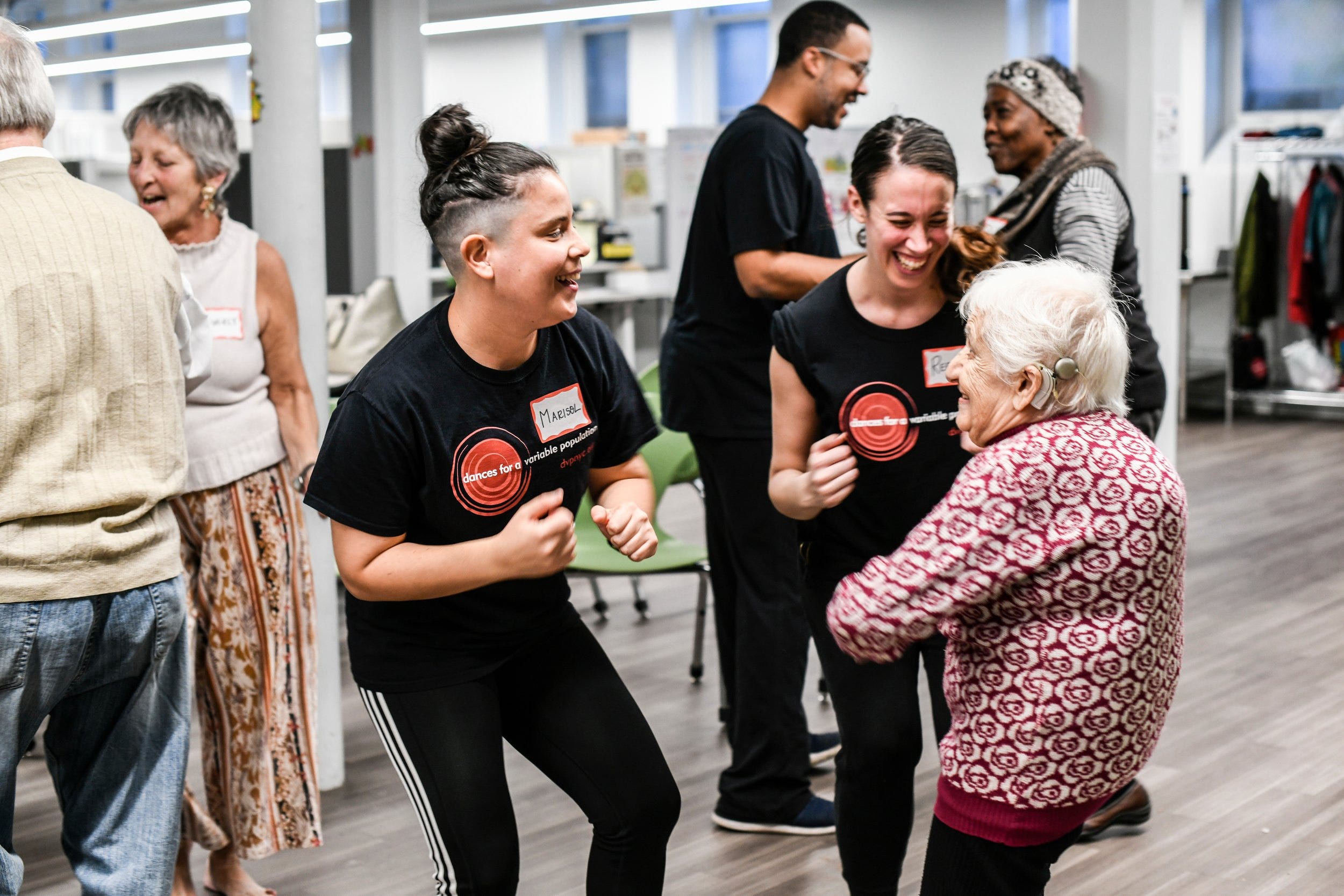
And this one isn’t visual art at all. Dances for a Variable Population, a NYC organization offers contemporary dance classes centered on older bodies. It’s artistically rigorous and actually accessible at the same time. And what happens over time is this lovely reciprocal thing: long-term participants become advocates of the program. Teaching artists invest more deeply because their students genuinely care.
All of this research kept bringing me back to my grandma. Connecting across a thirteen-hour time difference is genuinely hard, especially without my mom at her place. But one thing I’ve decided to keep doing is regular online art-making sessions with my parents. My dad has zero creative outlet, and I’m curious what consistent art-making might open up for him.
Do you know of any creative aging initiatives in your area? Or has someone in your life — a parent, grandparent, older friend — had an experience with arts later in life? I’d love to hear about it.
If this post resonated with you, the best compliment would be to share it with one person who might enjoy this or restack it for others to discover 💚
My grandma lived with Alzheimer’s for the last 12 or 13 years of her life in a nursing home. One of the activities they would do was painting. I have one of the paintings she made of a house and garden hanging in my bedroom. It reminds me so much of the house my grandpa built and the giant garden she used to tend. I like to believe that she was having fond memories while painting because it just feels so happy.
Wow, this was incredibly helpful. As a physician entering psychiatry, definitely saving this. I am passionate about helping others reframe aging, I wrote about it my recent post too. Saving your post for future reference!